
Rescue Training Inc
Advance from EMT to Paramedic with Rescue Training Inc.

Train through the CAAHEP-accredited Chatham County Paramedic Consortium while building advanced assessment, critical-care and clinical decision-making skills.
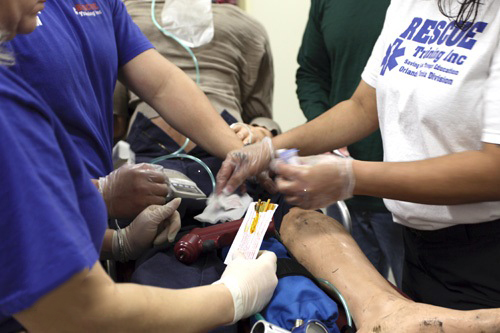
Shift-friendly, accredited Paramedic education for working EMTs.
Start Date: January 13, 2027
Location: RTI – Savannah, 9 Mall Terrace, Savannah, GA 31406
Class Times: 9:00 AM – 5:00 PM
National Registry Exam: TBD
Projected End Date: October 13, 2027
Class Days: Every 3rd day, no weekends
EMS & Hospital Clinical Rotations: 340 hours
Lead Paramedic with Preceptor: 60 hours
Tuition: $7,600
January – April 2027 Calendar
Calendar covers the first four months only. The projected program end date is October 13, 2027.
For EMTs ready to advance to paramedic-level care.
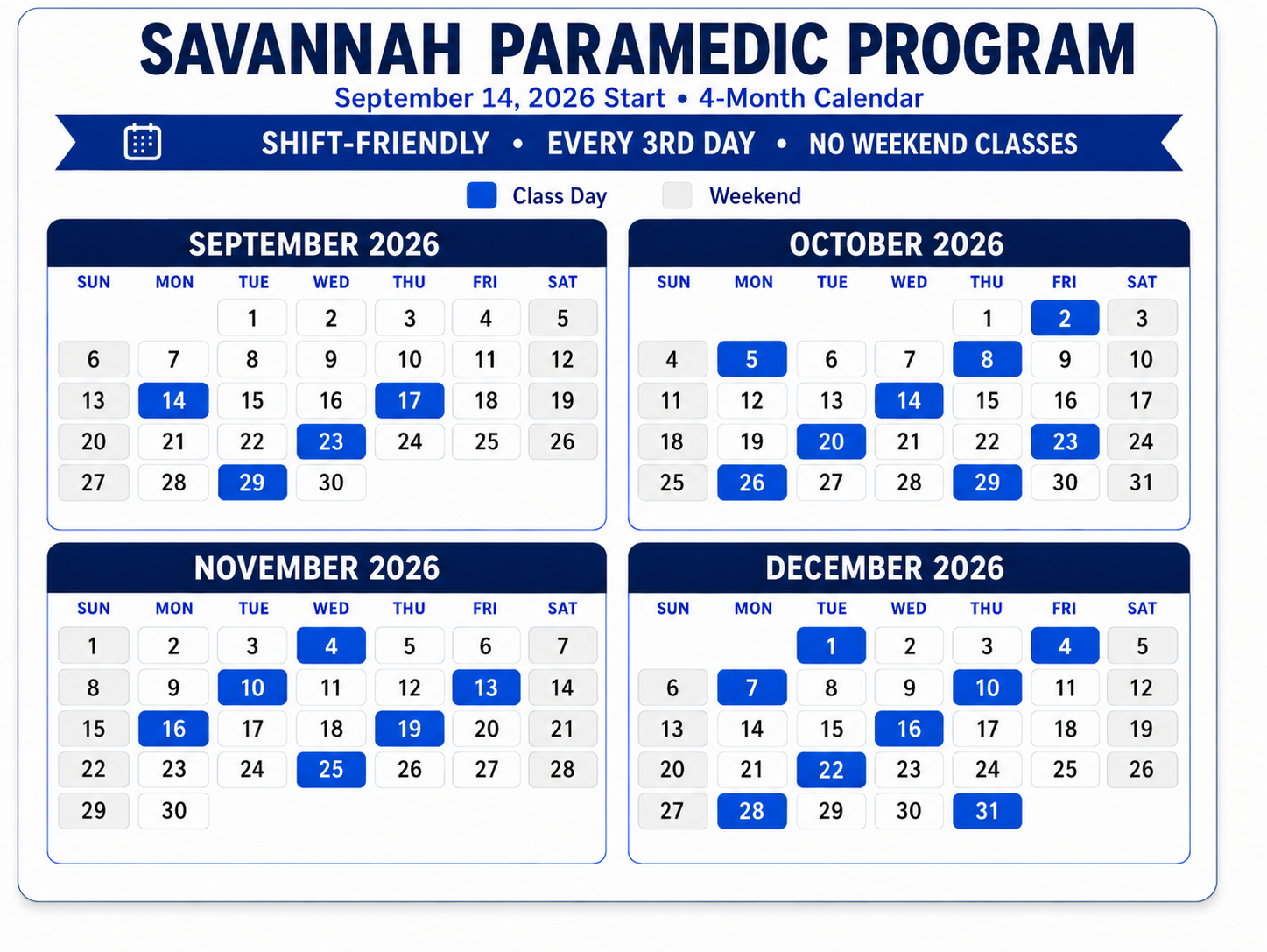
Start Date: September 14, 2026
Location: RTI – Savannah, 9 Mall Terrace, Savannah, GA 31406
Class Times: 9:00 AM – 5:00 PM
National Registry Exam: TBD
End Date: June 10, 2027
Class Days: Every 3rd day, no weekends
EMS & Hospital Clinical Rotations: 340 hours
Lead Paramedic with Preceptor: 60 hours
Current class information and student resources.
Start Date: February 24, 2026
Location: RTI – Savannah, 9 Mall Terrace, Savannah, GA 31406
Class Times: 9:00 AM – 5:00 PM
National Registry Exam: TBD
End Date: November 24, 2026
Class Days: Every 3rd day, no weekends
EMS & Hospital Clinical Rotations: 340 hours
Lead Paramedic with Preceptor: 60 hours
September – December 2026 Calendar
The Paramedic program prepares students for advanced life support practice including comprehensive patient assessment, airway management, cardiology, pharmacology, trauma care, and critical decision-making in the prehospital setting.
This is a 1,112 hour blended paramedic program that includes classroom, online instruction, hospital clinical rotations, and EMS field internship experience.
This blended paramedic program utilizes alternative delivery methods and online learning platforms. Students must have reliable internet access in order to complete assignments, quizzes, exams, and other required coursework.
The schedule is shift-friendly. When class falls on Saturday or Sunday, students do not report to campus but instead complete online assignments and exams.
For more Georgia EMS information: EMS Initial Education | Georgia Department of Public Health
Students must have reliable internet access and be prepared to complete classroom instruction, online coursework, hospital clinical rotations, and EMS field internship requirements.
This program is designed to be shift-friendly and follows a blended format to help working EMS professionals complete the course requirements.
Nancy Caroline's Emergency Care in the Streets, Ninth Edition is the newest evolution of the premier paramedic education training program. This legendary paramedic textbook was first developed by Dr. Nancy Caroline in the early 1970s and transformed paramedic education. Today, lead editors Bob Elling and Barb Aehlert, along with the American Academy of Orthopaedic Surgeons, are proud to continue this legacy and set the new gold standard for the paramedics of tomorrow. The Ninth Edition offers cutting-edge, evidence-based content that meets or exceeds the most current scientific recommendations developed by the International Liaison Committee on Resuscitation (ILCOR) and the ECC Guidelines established by the American Heart Association and other resuscitation councils around the world. Clear chapter objectives align with the 2019 National EMS Scope of Practice Model and 2021 EMS Education Standards. Thoroughly reviewed by medical doctors and subject-matter experts, the Ninth Edition teaches students the technical skills required of today's paramedic while emphasizing other important professional attributes, including critical thinking, empathy, teamwork, communication, problem solving, and personal well-being. Taking a systemic approach to the assessment and management of traumatic and medical emergencies, and devoting entire chapters to special topics, such as mass-casualty incidents, the Ninth Edition covers the full scope of paramedic practice.

Paramedic students have reported struggling with:
Time management. Each week, you’ll have class, study time, clinical rotations, and often a job to balance. Be prepared to put your social life on hold and cut out nonessentials. Paramedic school is not the time to make major life changes such as moving or getting married.
Cardiology. Learn how to read an EKG and identify common rhythms. One commonly recommended resource is Rapid Interpretation of EKGs .
Drugs and pharmacology. During clinicals and field internships, you will be expected to know your medications thoroughly. Flashcards can help with actions, indications, doses, and contraindications.
People skills. If you enter paramedic school without street experience as an EMT, you may initially feel uncomfortable around patients and hospital personnel. This improves with practice, but you must ask for help when you need it.
As an EMS student, paramedic school will test the limits of your ability. Since it is such a large commitment, it is important to understand both the program requirements and your personal readiness, then take the steps necessary to close that gap.
EMS1 articles are intended to educate the emergency medical services audience about the EMS profession, jobs and careers. These articles are written by EMS1 staff members and contributors, and cover a wide range of topics from EMS protocols to the general requirements for becoming a paramedic.
Questions? Call us at (912) 692-8911 or email rti@rescue1.com

